
Jackals exploit ‘human shield’ to evade wolves Canid News 2026 issue 2
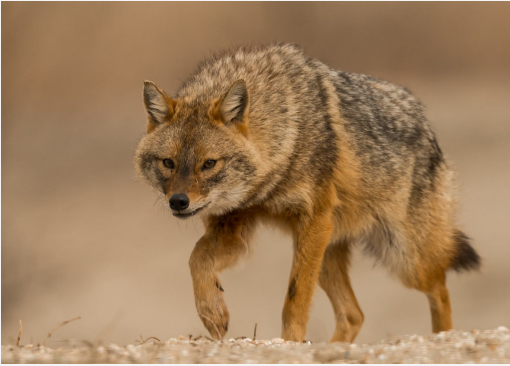
New research has revealed that grey wolves (Canis lupus) are the main factor limiting the expansion of golden jackals (Canis aureus) in Europe. However, human activity is importantly reducing this suppressive effect of top predators. In combination with human-induced climate warming and land-use changes, this makes future bright for the mesocarnivore. The new study published in Nature Ecology & Evolution predicts that jackals could colonize up to 75% of the continent, almost six times their currently occupied area.
To better understand mechanisms behind one of the most dramatic range shifts among canids in recent history, researchers from 13 European countries studied the ongoing expansion of the golden jackal. The study is based on standardized jackal howling survey data collected from 2001 to 2017 at 8,991 locations distributed across Central and Southeastern Europe. Results show that shorter snow-cover duration, intermediate forest cover and proximity to water bodies are all associated with jackal presence. But wolf presence has the strongest impact: jackals are most likely to be present where wolves are absent or occur sporadically and least likely in the core areas of stable wolf packs. This lends support to the mesopredator release hypothesis indicating that the historic decline of wolves in Europe was the main trigger for jackal spreading on this continent.
Results further show that human presence can modulate jackal-wolf interactions through a process known as ‘human shield’. Researchers observed that jackals generally avoid human settlements in regions where wolves are absent. But where wolves are present, jackal behaviour changes as they select areas near people.
Based on these insights, the authors also developed a model that predicts the extent of future jackal expansion. They found that 75% of the total area of the continent is environmentally suitable for this species. This is six times larger than the area jackals currently occupy, with large areas of Western Europe, where jackals were first detected in recent years, predicted to be very suitable for this species, especially in France and in the Iberian Peninsula.
Further jackal expansion will also depend on the future of wolf dynamics in Europe. Following decades of persecution and a historical bottleneck around the 1970s, wolves are now recolonizing large parts of their historic distribution in Europe. This has already reduced the potential for jackal expansion in a considerable part of Europe (ca. 320,000 km²).
The study provides evidence that the recovery of apex predators can act as a nature-based solution to regulate expanding mesocarnivore populations. However, to retain such ecological effects, apex predators must reach ecologically-effective densities and sufficient social stability. This can be a considerable challenge in human-dominated landscapes like Europe and often requires proactive management and effective conflict-prevention measures to facilitate their coexistence and reduce social conflicts.

Reference
Ranc, N. et al. 2026. Human shielding from wolves facilitates jackal expansion across Europe. Nature Ecology & Evolution. doi: 10.1038/s41559-026-03060-y